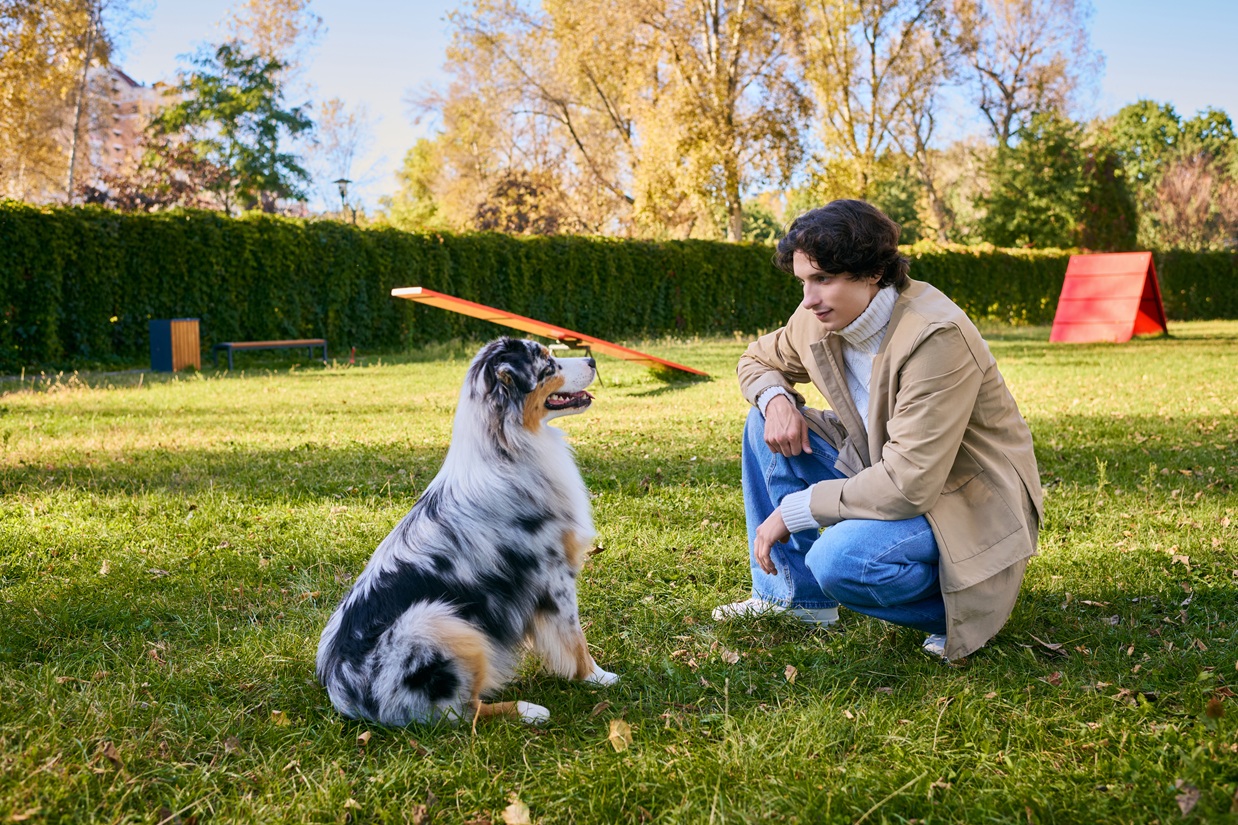
Socialization is an important part of raising a confident, well-mannered dog, but it involves much more than simply allowing dogs to play together. Proper socialization helps dogs learn how to respond appropriately to different people, animals, environments, sounds, and everyday situations.
Professional dog training programs can incorporate controlled socialization alongside obedience training. This gives dogs opportunities to experience the world while learning how to remain calm, focused, and responsive to their handler. Let’s take a closer look.
Socialization Is More Than Meeting Other Dogs
When people hear the term “dog socialization,” they often think about interactions with other dogs. While learning appropriate behavior around dogs can be important, socialization covers a much wider range of experiences.
Dogs may need to become comfortable around children, adults, bicycles, vehicles, household noises, unfamiliar surfaces, new buildings, and busy outdoor environments.
Professional training can introduce these experiences in a structured way rather than simply exposing a dog to as many situations as possible.
Learning to Be Neutral Around Other Dogs
A well-socialized dog does not necessarily need to greet or play with every dog it encounters. In many situations, neutrality is the more useful skill.
During professional training, dogs may practice obedience while other dogs are nearby. Instead of pulling toward another dog, barking, or becoming overly excited, the dog learns to remain focused on its handler.
This type of controlled exposure can be particularly valuable for everyday activities such as neighborhood walks, trips to parks, or visits to dog-friendly businesses.
Gradually Introducing New Environments
Professional dog training programs can also expose dogs to different environments as their skills develop.
A dog might begin practicing commands in a quiet training area before progressing to locations with more sights, sounds, smells, and movement. The level of difficulty can be adjusted according to the dog’s confidence and ability to remain focused.
Gradual exposure allows trainers to observe how a dog responds and avoid overwhelming it with too much stimulation at once.
Combining Socialization With Obedience
Socialization and obedience can work together. Commands such as sit, stay, place, heel, and recall give handlers ways to communicate with their dogs when distractions appear.
For example, a dog might practice maintaining a sit while someone walks past or holding a place command while activity occurs nearby. A dog learning loose-leash walking might practice staying focused when another dog is visible.
Over time, these exercises teach dogs that familiar expectations still apply in unfamiliar or exciting situations.
Building Confidence Through Positive Experiences
New experiences should be introduced in ways that help dogs develop confidence. Trainers can use praise, food, play, and other rewards to reinforce calm and appropriate responses.
Not every dog progresses at the same pace. A confident puppy may quickly adjust to new environments, while a fearful, reactive, or inexperienced dog may require more gradual exposure.
Professional trainers can adjust socialization exercises based on the individual dog’s temperament, history, and behavior.
Continuing Socialization After Training
Socialization should continue after a professional training program is completed. Owners can reinforce progress by giving their dogs appropriate opportunities to experience different environments while continuing to practice obedience.
Regular walks in new locations, controlled exposure to visitors, and training around everyday distractions can all help.
The objective is not to make a dog interact with everything it encounters. Instead, effective socialization helps a dog learn how to navigate the world calmly and confidently while continuing to listen to its owner.
Prestige Dog Training
Whether you’re dealing with basic obedience challenges or more complex behavior issues, professional training can make a lasting difference in your dog’s life. At Prestige Dog Training, programs are designed to meet dogs where they are, with customized approaches that build confidence, improve behavior, and strengthen the bond between you and your dog.
From immersive board and train programs to private lessons and group classes, the goal is simple: real results that carry over into everyday life. If you’re ready to see meaningful, lasting change, now is the perfect time to take the next step.