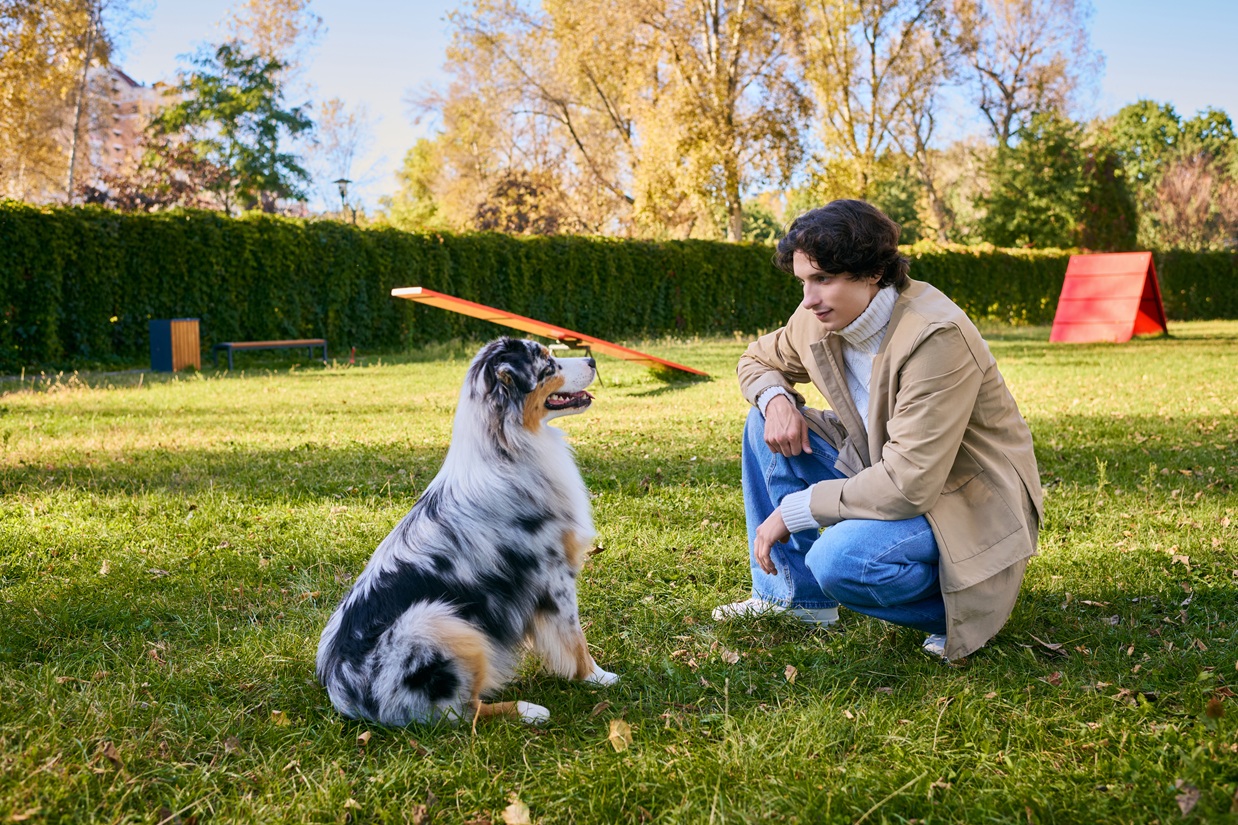
Basic obedience training gives dogs the skills they need to understand what is expected of them at home and in public. While commands such as “sit” and “stay” are often the first things people associate with obedience training, a well-rounded program goes much further. It helps establish communication between dogs and their owners while teaching behaviors that can make everyday situations safer and easier to manage.
Here are some of the most important skills commonly taught during basic dog obedience training.
Sit
“Sit” is one of the foundational commands in dog training. Dogs can be taught to sit before receiving food, greeting visitors, walking through a doorway, or getting attention.
Teaching a reliable sit also gives owners a simple way to redirect excited behavior. Instead of allowing a dog to jump or rush toward something interesting, the owner can ask for a calm, controlled behavior.
Stay
A reliable “stay” teaches a dog to remain in a designated position until released. Training usually begins with short periods and minimal distance before gradually introducing longer durations and distractions.
Stay can be particularly useful when answering the front door, preparing meals, loading the car, or managing a dog around guests.
Come
Recall training teaches a dog to return when called. This is an important obedience skill because it can help owners maintain control when their dog becomes distracted.
Training a reliable recall requires repetition and positive experiences. Dogs should learn that responding to their owner is worthwhile even when other people, animals, smells, or activities are competing for their attention.
Place
The “place” command teaches a dog to go to a specific location, such as a bed, mat, or elevated platform, and remain there until released.
Place training can help dogs learn how to settle instead of constantly following people, jumping on guests, or becoming overly involved in household activity. It can be especially useful when visitors arrive, or the family is eating dinner.
Loose-Leash Walking
Walking politely on a leash is another major component of basic obedience training. Dogs can learn to walk near their handler without constantly pulling, lunging, or changing directions.
Loose-leash walking can make daily walks more enjoyable while helping owners maintain better control in busy environments. Training may also address how a dog responds when encountering common distractions such as other dogs, pedestrians, bicycles, and wildlife.
Waiting at Doors and Other Boundaries
Good obedience extends beyond individual commands. Dogs can also learn impulse control around doors, gates, stairs, vehicles, and other boundaries.
Instead of rushing through an open door, for example, a dog can learn to wait for permission. These behaviors can improve safety while reinforcing the importance of paying attention to the handler.
Building Focus Around Distractions
Knowing a command in a quiet living room is different from performing it around distractions. A basic obedience program should gradually teach dogs to respond even when interesting things are happening around them.
Training around controlled distractions helps dogs develop focus and prepares them to use their obedience skills in real-world situations.
Creating a Foundation for Better Behavior
Basic obedience is not simply about teaching a list of commands. It establishes communication, structure, impulse control, and expectations that can influence a dog’s behavior throughout daily life.
Once these fundamentals are established, owners can continue reinforcing them while progressing toward more advanced obedience or addressing specific behavioral challenges. A strong foundation gives both the dog and owner the tools needed to communicate more clearly and confidently.
Prestige Dog Training
Whether you’re dealing with basic obedience challenges or more complex behavior issues, professional training can make a lasting difference in your dog’s life. At Prestige Dog Training, programs are designed to meet dogs where they are, with customized approaches that build confidence, improve behavior, and strengthen the bond between you and your dog.
From immersive board and train programs to private lessons and group classes, the goal is simple: real results that carry over into everyday life. If you’re ready to see meaningful, lasting change, now is the perfect time to take the next step.